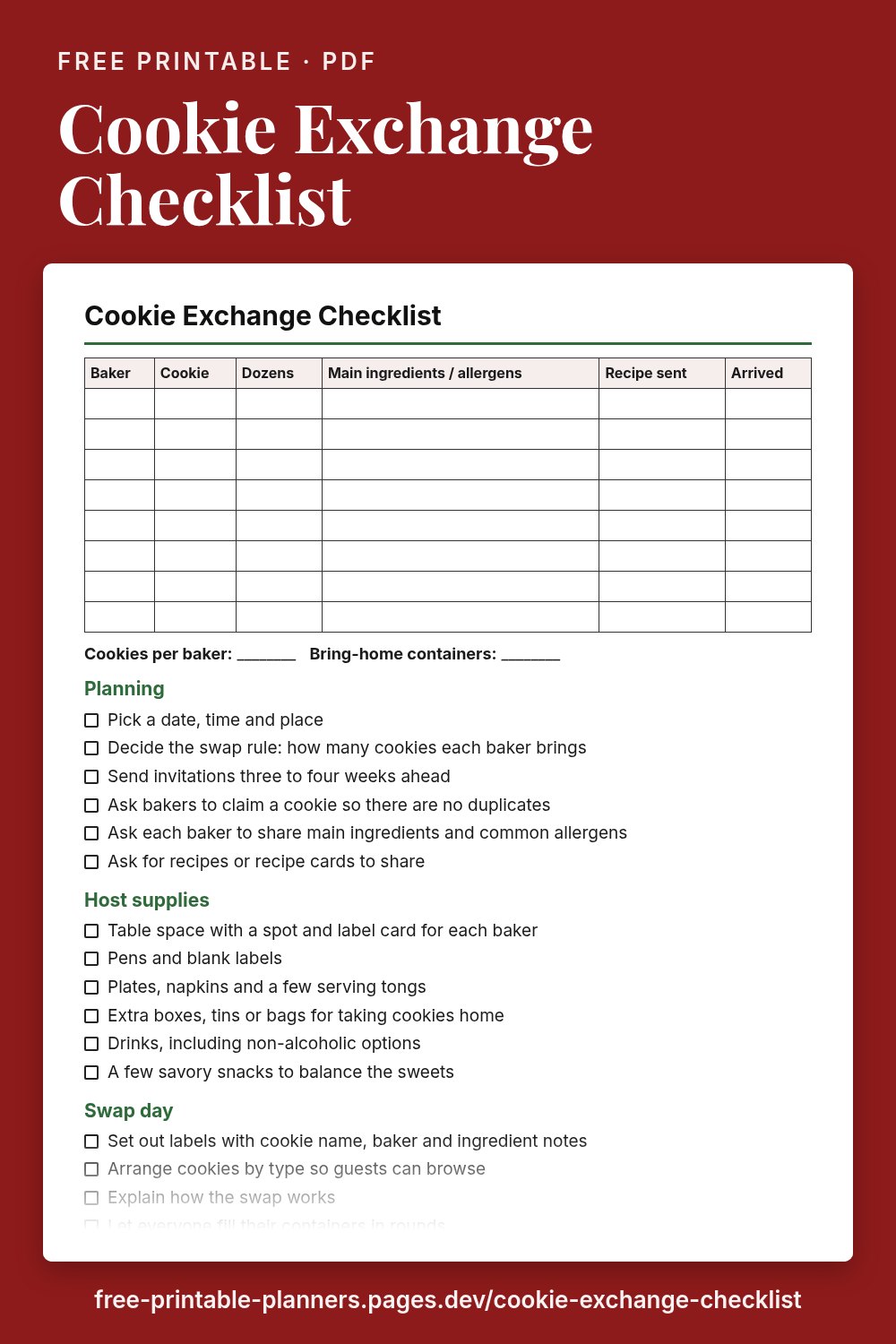
Host a holiday cookie swap without the guesswork: track who is baking what and how many, collect ingredient notes, and tick off host supplies and swap-day tasks.
Cookies per baker: ________ Bring-home containers: ________
Planning
Pick a date, time and place
Decide the swap rule: how many cookies each baker brings
Send invitations three to four weeks ahead
Ask bakers to claim a cookie so there are no duplicates
Ask each baker to share main ingredients and common allergens
Ask for recipes or recipe cards to share
Host supplies
Table space with a spot and label card for each baker
Pens and blank labels
Plates, napkins and a few serving tongs
Extra boxes, tins or bags for taking cookies home
Drinks, including non-alcoholic options
A few savory snacks to balance the sweets
Swap day
Set out labels with cookie name, baker and ingredient notes
Arrange cookies by type so guests can browse
Explain how the swap works
Let everyone fill their containers in rounds
Share or collect recipes
Send leftovers home with guests
Preview of the printable page. The PDF and print view show the full sheet.
How a cookie exchange works
At a cookie exchange (or cookie swap), each guest bakes a large batch of one kind of cookie and brings it to the party. The cookies are laid out together, and everyone leaves with a mixed box of different cookies roughly equal to what they brought. It is a simple way to get variety for the holidays without baking ten recipes yourself. This checklist covers the three things that usually go wrong: duplicate cookies, unclear numbers and missing ingredient information.
How many cookies should each person bring?
There is no fixed rule, so pick one and put it in the invitation. Two common approaches are:
Per guest: each baker brings about half a dozen cookies for every other guest, so everyone goes home with a similar mix.
Flat number: each baker brings a set amount, such as three to six dozen, and guests share out the table at the end.
Fewer guests means each baker needs fewer cookies. With eight to twelve bakers, most groups land on a few dozen each. Write the number in Cookies per baker and in the table's Dozens column as people confirm.
Ingredient and allergen notes
Guests often need to know what is in each cookie. Ask every baker to list main ingredients and common allergens such as nuts, peanuts, dairy, eggs, wheat or gluten, and to say if anything was made in a kitchen that also handles them. Put those notes on the label card next to each plate. This sheet only helps you collect the information; anyone with a serious allergy should check directly with the baker and make their own decision.
Cookie exchange timeline
Three to four weeks before: set the date, send invitations and state the swap rule.
Two weeks before: collect cookie choices in the table and steer people away from duplicates.
One week before: confirm the final count, gather containers and label cards, and remind bakers to bring ingredient notes.
Swap day: lay out the table, explain the rounds, share recipes and send everyone home with a full box.
How many cookies should each person bring to a cookie exchange?
There is no standard number. Many hosts ask for about half a dozen per other guest, or a flat few dozen per baker. Pick one rule, put it in the invitation and track it in the Dozens column.
How many people should I invite?
Small swaps of six to twelve bakers are easy to manage. More people means more variety but also more cookies for each baker to make.
How do I avoid duplicate cookies?
Ask guests to claim their cookie when they RSVP, write each one in the table and let later guests see what is already taken.
Should bakers list ingredients?
It helps. Ask each baker to note main ingredients and common allergens on a label card. Guests with allergies should still check with the baker directly.
Will this print on A4 paper?
The PDF is US Letter size. On A4, choose "Fit to page" or "Scale to fit" in your print dialog.